Showing posts with label 100 languages. Show all posts

Tuesday, 26 July 2016

wabi sabi

My daughter and other children climbing on the "best part of the park" after hours of walking through the spectacularly beautiful Stanley Park in Vancouver, BC. There are beaches, swimming pools and splash pads, winding mountain trails leading to breathtaking views of the ocean. The park is filled with play structures, a fantastic aquarium, and the beaches with waves. This downed tree, however, an artifact of a terrible storm that took down several "grandfather trees", was her favourite when we last visited two years ago. It took a few minutes to capture a photo without a crowd of kids, all ages, hanging from all the branches or scooting along the trunk. Here's another view, complete with crowd.

The softened bricks that once were buildings, then landfill used to create the land that became Colonel Sam Smith Park - they invite visitors to touch, sort, play. Their broken edges, rounded corners, and various colours and sizes make them challenging and fascinating loose parts for building. They are undeniably beautiful, yet seen out of context, might seem broken and useless.

It is a hot, indeed steamy day today as I sit to write. I spent part of the afternoon out on my bike with my daughter, riding up the local ravine through which the Etobicoke Creek flows, sometimes slowly, but today noisily after last night's wild thunderstorm. Everywhere we looked there were signs of the violence of the storm: deep brown, churning water flecked with white foam, downed boughs clogging the creek where it widens down by the lake, smashed flowers and leaves on the footpath, leafy boughs and refuse caught in branches hanging over the creek, evidence of the higher water level carrying flotsam and jetsam high above the banks. We paused awhile in the forest, up past the cascade that today rushed loudly like a waterfall, around the bend where the trees arch over and it feels like the city is far, far away. The rain was long gone, now, and a hazy sunshine beat down through humid air, but when the wind blew it dislodged droplets from the leaves overhead and it rained anew as we took refuge in the shady forest path.

The creek, usually clear, looked brown and frothy after last night's storm. Look closely at the water's edge right above the straw bale (another gift from the storm? It appeared since my last visit days ago) to see the night heron fishing in the cascade. All over this spot, one sees evidence of storms past: cracks in the pavement above, whole sections broken off and washed downstream, chunks snapped and resting precariously like the one on which the straw bale rests. It is a reminder of the power of water, and fragility of structures that seem unbreakable. The cascade is a favourite resting spot for birds and people alike. Click here to see the heron lift off and fly away, after catching a fish.

I am always struck by the beauty of the ravine, though it is not landscaped or kept clean like the beautiful Marie Curtis Park at its very southern end. It is a wild place, but there is evidence of people all around, too: broken glass, plastic bags caught in trees, shopping carts barely visible below the water's surface in the shallows below the first cliff. One hears planes fly overhead, trucks rumble by on nearby roads, distant dogs barking, and occasionally music drifts down from homes high above on the eastern edge of the valley as we ride along the trail.

One of the shale banks on the western side of the creek, where mink scurry, tiny bank swallows swoop in and out of holes in the wall, kingfishers fly noisily by, crayfish hide under rocks, and fish dart about around one's feet. Also here: a shopping cart (under the water, half buried in the silt), broken glass, crushed beer cans, burnt wood from campfires, a torn shirt, vertebrae from some small mammal. The cliff is a visual reminder of the passing of time, the lives that have lived here (especially those encased in the fossils found all along the creek) and the durability of life. The trees cling at marvelous angles, and it is easy to forget that the city exists just beyond these hills.

There is something rather remarkable about an urban ravine, a place that is both wild and also entirely constrained. Back at home, nearby, the city trucks come by and remove the dangerous, the ugly, the roadkill, the garbage. Here in the valley we see it all, and watch it change and sometimes become something beautiful. Downed trees become a bridge to climb on, broken concrete a new challenge to explore. A bloated carcass of a raccoon loses its hair, then its shape, and much later, appears as scattered bones and teeth, often with traces of gnawing or scraping by scavengers.

Our ride today wasn't a long one, as the heat was oppressive and the water too busy to stop and soak our feet at the cascade. I thought of how Cooksville Creek beside our school might look, as it is also prone to flooding after a storm. I wondered if the no-mow zone was again littered with debris from the high water, or if any students were watching the creek gush past under their feet from the bridge beside our school's driveway. Thinking about our tiny, concrete-bounded stream which gurgles past the yard with litter and wildlife alike, I thought of how lucky I was to teach at a school with something wild right beside it. Not perfectly wild, to be sure, but living water nonetheless. It made me think of an idea I'd tucked away last year, a blog post I had started by saving a storify conversation. I've long been attracted by the idea of "wabi sabi" but at the time was beginning to see how it was a part of my teaching practice. So it was last year I left myself the fragment in blue below, along with the photo of the beach glass and ceramics I'd gathered that day. I remember it struck me, as I picked up and turned over each piece I found on that sandy, stony beach, that this favourite pastime of mine was a metaphor for learning and growing, the way one turns over ideas, tosses back those that no longer make sense (and on the beach, that I always toss back the rough, too sharp pieces which need more time in the waves) and makes room for new ideas. Left in draft so long ago, now when I came to revisit I know I've forgetten many of the ideas that circulated when I left these traces. New events touched on old ideas and they became changed, grew a part of how I understood the challenges I faced over the year: saying goodbye to our beloved cat after fourteen years; seeing our class grow, shrink, and grow again as students moved away and others took their place; welcoming students whose families had fled Syria and learning so much about resilience as we played together, grieving for my uncle who passed this year but learning to appreciate him so much more as I listened to his stories from friends and family at his memorial; losing my teaching partner at the end of this year as she moved on to help open a new class. Naturally I look at the handful of glass now and see with different eyes. But my understanding of what is beautiful, what is worthwhile sharing with students and families, and what is worth celebrating... that only grows. My understanding of what matters, and how learning happens, has grown tremendously.

the convo that led to a new understanding...


Finding beauty at the beach - pondering the beautiful colours and mysterious origins of the treasures I found this week at the water's edge.


I know the beach glass represented, as it does for me still, the beauty of something transformed by relationship - broken, discarded, and yet made precious by its time tumbling in sand, stone and waves. I have collected treasures such as this on my local shore for many years now, for loose parts creative play and for giving away. Those pieces, each a shard of something that was whole, now a part of a collection, represent belonging.

Now I am aware that all this preamble might seem completely unrelated to teaching and learning, the stated theme of my blog. It is, however, entirely related to how I see learning and growing. As a child I was concerned with "getting things right" at school, that is to say, following instructions and getting good grades. I wasn't a success socially, not during elementary school, but academically I fit right in and it made me feel safe (recess was another matter entirely). I had glimpses of a bigger world, through travel to France and Spain as a teen. I experienced "otherness" and the feeling of not belonging, not being able to express myself in my new surroundings with my limited language, thinking teachers must think me dumb. But the stakes were low: my marks at home were fine and my time in Spain wasn't going to count against me. It wasn't until later, in university, that I discovered my ability to fail. I found it terrifying at the time, but not understanding what was expected was a gift, one that allowed me to begin to look critically at what mattered. Studying post-structuralist thought made me panic, as though the cognitive dissonance I felt was actual walls coming down around me, and not merely old ideas crumbling. I found that I couldn't look at anything the same way once my eyes had been opened to the world, my small-town view bust wide by my big city surroundings and multi-cultural friends. Most painful was a new way of looking at "whiteness", from the myriad points of view as I made friends from various continents including aboriginal Canadians. Seeing racism directed at friends made me fiercely protective and yet terribly hopeless. I didn't want to be a part of it, but didn't know where I fit. My own family home was a safe haven, a place of guests and stories and generosity and fun. But when I looked at myself with this new lens, of not-white, I couldn't see beauty anymore. I felt broken. It took time to find the beauty in that break.

“There is a crack in everything. That's how the light gets in.” Leonard Cohen


Safe to say what I experienced is not uncommon for any small-town kid who goes too far from home and doesn't know where "up" is. It took time for me to connect to what matters most to me, what I missed most about home - nature. I learned to see the life heaving in every corner of the city, not just in the big parks or along the shore. I learned that I remain passionate about equity and it has a place in my teaching practice. I learned that breaking isn't a bad thing, if it means letting the light in. Learning involves letting go, and assimilating, and growing. For that reason, I connect deeply with the idea of wabi sabi, as I understand it. A few years ago I found a beautiful book written for children, touching on the meaning of wabi sabi. I was so delighted, I immediately bought more copies, knowing it was a concept I shared with others in my Reggio-inspired PLN. It resonated with me as deeply as the poem, the 100 languages. It struck me that embracing a wabi sabi view of learning was the only way to ensure all voices could be heard, all those 100 languages and 100 more. Being appreciative, rather than fearful, of things unexpected... leads to wonderful collaborations through playful inquiry. Being brave, that is, unafraid to make mistakes and face the consequences - that was not possible in a "lessons first, play as reward" classroom as I first saw and practiced when I began teaching back in 2003. Seeing diversity as much more than culture, language or colour, but encompassing ways of being beyond what is "neurotypical" - allows me to understand my own thinking better as I learn to understand that of others. Not having a set idea of how our classroom "should look" helps too, though I am often struck with self-doubt upon entering rooms of peers who manage to make their space showroom-perfect. Negotiating our space with students, talking about how we use our materials and our furniture and our bulletin boards - curriculum emerges as does the look of the space we share. 

 Back in the spring I tackled this idea as well, this question I have about the meaning of beauty and how (or if) is it meaningful to teaching and learning. In describing it as one part of a "tangle of spaghetti" I was attempting to unravel, I said:

One such "noodle" running through my mind was the idea of beauty: What is beauty? What does it mean to enjoy something beautiful? Is beauty important to play? Is beauty important to learning? Are there shared ideas of beauty across the diversity of human cultures and across age groups? Do our notions of beauty change as we grow and learn?

I continue to ponder this idea, but without a perfect description of what it is, I still think seeing beauty in what might otherwise seem mundane leads one to see possibilities everywhere. Seeing beauty in others, especially when they are unable to see it themselves, is one of the greatest gifts we can give to a child or adult.


"Using spare text and haiku, Mark Reibstein weaves an extraordinary story about finding real beauty in unexpected places."


Below is the conversation that grew around the idea of being a courageous educator. Being courageous, being willing to accept other ways of seeing, remains the best way to learn alongside our students and partners every day. I'm grateful to the #ReggioPLC for this (and many other) critical conversations about our beliefs. Please note: the story has a second page, you will need to click through after reading the first.


                 *                              *                                *                                *                          *

A favourite page from "Wabi Sabi".


A favourite photo of mine, capturing fall (above and below) on my street after a heavy rain. Autumn often evokes strong emotions, because the beauty is so fleeting, and carries with it the poignant reminder of life's passing. The reflection within further adds to the idea of finding ourselves in the cycles in nature, that we grow and shed and grow anew as we learn about life.


As I think of my relationships with students, teaching partners, and the larger community that come together around our Kindergarten class, I am struck by how much reflection goes on as we examine our world together. We find meaning through our interactions, and through remaining open to a world of natural beauty, we learn so much more than is possible in an organized, sanitized version of teaching in which only the proper, good, clean, pre-made materials are considered for use.

“We do not learn from experience... we learn from reflecting on experience.” John Dewey


Several days' worth of dandelions, lovingly collected by students during the first few weeks the flowers emerged. Treasures from nature always wind up on the "look closely" table under the window.

Dandelions, like fall leaves, become a part of play and exploration for weeks. They decorated "sand cakes", became necklaces and crown, were rubbed onto drawings to impart their golden glow, added to the snail globe to "give the snails something nice to eat and smell", places in vases, dried and ground up in the mortar and pestles, added to potions.


https://blogger.googleusercontent.com/img/b/R29vZ2xl/AVvXsEjKbNMhLj1LqkP-bSITO6_f-kEjo50YZpFPfFbSDtZiml6oPnurDpqetEF-bRVBC4c2_RB7HGD4IZDsnpZkwpIb-unvbRHzKaP2wUc1E5zNSPLlJrohYXCewFRvBQPYd_iANpaIAhb7Y-0/s1600/wabisabi.jpg
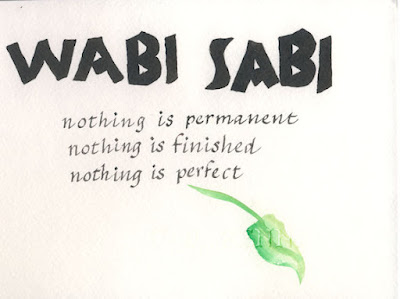
A common description found online. It seems a perfect way to leave a thought that I haven't finished yet.


Wednesday, 9 December 2015

what a puddle taught us

 "When a curious child and a knowledgeable teacher explore the phenomena of the real world, genuine science begins." Frances Hawkins

Water leads to wondering... wondering leads to engagement... engagement leads to learning.

I love SS's story. It highlights her determination and growing self-regulation skills, the learning that happens when you look closely and observe changes in the local natural world, and most of all, the joy of playing in a puddle.

A photo I've shared in the past, when describing the "decisive moment" in capturing a mood in a photo. I couldn't help but notice how many of the photos I chose to illustrate moments of learning involved water.

I have long used the term "puddle jumper" to describe a certain type of person, a kindred spirit... someone who embodies playfulness and joy well into adulthood. Friends know I'm likely to go out when it rains, looking for snails or following rivulets that run down the street over leaves and stones. My penultimate post was an extended metaphor for documentation, seen through the lens of reflection on water. It was inspired by the idea that reflection is always changing, based on one's point of view. A few days later, I shared the incredible learning journey of a friend and colleague who embraced full-bodied exploration of a puddle with her students, and was changed by the experience.

Our class adopted a puddle last year - two, in fact. The year before, my AM and PM classes had each adopted a tree to visit weekly, but the idea just didn't catch on in our new FDK class. The water that gathered near the walkway to the buses, on the other hand, fascinated all. One puddle, near our neighbour's classroom gate, appears and disappears at the whim of the weather. It grows to a small pond after a hard rain, and dries up with nearly a trace after a day or so of sun. It is a wonderful thing - reflecting the school or the sky, depending on where you look. It grows large and deep at times, and later leaves only a darkened shadow of itself, a mere grey trace.


In September our returning SK students quickly taught the new JK friends what our class does after a good rain - here's a group of kids well dressed to enjoy the sometimes puddle with my teaching partner, Pooneh in the back (pink boots).

One day this fall several students were excited to discover how chalk reacts to getting wet, and conversely, how our puddle reacts to getting coloured on. The traces of this joyous play were beautiful for days afterward.

When I find a quote meaningful and wish to share it, I look for a photo from my own experience that illustrates the idea for me. It struck me this year that nearly half of the pictures I've used in the manner have involved discoveries or exploration of water. Noticing our environment means finding patterns, traces, and surprises in nature.

The other puddle, a little strip of water that forms beside the concrete bunker just outside our gate, is affectionately known by all in our class as the "muddy puddy". My teaching partner and I have joked that this puddle is the reason many students beg their parents to buy them rubber boots. Mud is magnificent stuff. We explore it near and far around the schoolyard.

The beloved "muddy puddy" is a perfect illustration of one of many quotes from Ann Pelo that speak to me of eolithism - learning in and from the immediate environment.


The picture above rather beautifully captures our learning one day  - a cold, muddy puddle can be utterly delightful, or utterly misery, depending on how well dressed you are, and how well you pay attention to the details: how deep the puddle, how high your boots, how thin the ice, how sloshy the mud, how splashy the other kids in the puddle with you. By encouraging self-regulation, we allow students to figure out for themselves whether or not the mud puddle is an appropriate place for them to play. These students on this day listened to their bodies and to the situation, and had a marvelous time. Many other students watched from a safe distance on the hard ground. We applauded both choices.

The muddy puddle exploration on this day left an indelible mark on my mind - and I believe it will be remembered by those students for a long time, too. We learned about bravery, made mistakes, and played on. It was a grand outing, even though we were only out on the yard.

Sometimes the rain winds up creating new puddles, like these deep craters in the post holes around our kindergarten playground. This girl tested the height of the water against the height of her boots, and was happy to find that her feet stayed dry. Math and science was all the talk around the puddle this day.

More math play happened when this student found a cup for scooping and tried to empty the deep crater that her friend had been standing in (see above). I didn't stay long enough to capture how many scoops she had to do to fill the wheelbarrow, but it was already 15 when I left to explore elsewhere.

It was the collage below that lead me to believe it was time to look back over our learning thus far this year, and try to get at the big ideas students were exploring in their fascination (and mine) with water. Several projects and inquiries are ongoing in our class at the moment, and the year is winding down towards the winter vacation, thus making new conversations harder to facilitate during our short knowledge-building-circle time. I knew there was a theme emerging, one I'd want to remember and be able to share with the children later in the year when it came up again (as naturally it does when snow melts and freezes anew).


A recent water wonder from our class. I can't help but wonder where the arrival of snow will lead us in our questioning.


This wonderful day at the park last year remains another favourite memory for several students, now SKs.


Puddles seem a perfect metaphor for emergent curriculum. Even more so in a difficult year, when the social curriculum seems the most important lessons being highlighted each day, the need to "get one's feet wet" remains. Through relationships forged over messy play outdoors, friendships and trust are born. If you see a problem to solve, learning is inevitable. I thank my friend Nadine for sharing her puddle story, and inspiring me to look back over my own. I will consider it a success if this inspires even one reader to invest in a good pair of winter rubber boots. If you've learned something from a puddle, please consider leaving a comment here. 


Monday, 24 August 2015

inspired by things both great and small

“Life is like riding a bicycle. To keep your balance, you must
keep moving.” Albert Einstein
 
A and friends consider the delicate balance they have achieved. The varied sized in the wood blocks make symmetry, and balance, a challenge. 

This particular story has been bumping around in my brain for almost two years now, though the desire to challenge gravity in various ways seems to express itself every year in my teaching experience. Something was different in the school year of 2013-2014 (my last year teaching in a half-day program with a morning and afternoon class). I've pored over photos and documentation from that year, and it seems to me that the decisive element was the presence of a boy *referred to as A in the documentation. Note: There were five children beginning with "A" in the morning class, and three "A" children in the afternoon. I soon regretted my choice of single initial for our shared digital documentation, but students were used to it and were quite happy to tell their families at home who all the players in their inquiry stories were. In fact, I took it as a sign of pride that students were going home, asking their families to show them the class twitter, and pointing out their stories: "No, that's not my building. Yes, that's it, see my shirt there?" Last year we decided to go with full initials, thus A in this story (who is now going into grade two in a few weeks), would be AK. There were other technical challenges as well; lost dates, problems with storify, lack of hard copy documentation (locked at school for summer). This post illustrates one of my favourite inquiry stories, but also gives insight to the process of collecting and reflecting upon the story. As I delve into my learning journey about documentation, I can't help but make my learning visible.

I too, like A, am fascinated with structures that seem too precarious to stand still. I have long been a fan of a local balance artist, Peter Riedel (mentioned in previous posts here and here) whom I finally got up the courage to approach and chat with one day while he was at work on a beach near my home. I told him how I'd shown photos taken at the beach (over several years) to my students, and how an incredible inquiry unfolded (in previous years before A was in Kindergarten). I asked if he minded me using my photos and his on his website in PD, showing the beauty of exploring with loose parts. I am grateful that he welcomed the idea.


A treasure left on my local beach this summer by stone balancer Peter Riedel. I was delighted to find it, but sad I'd missed seeing it the day it was created. Often 15-25 of these sculptures appear, and over a few days some are knocked down (by large waves or more likely by human hands). When I found this one it was one of four remaining.

My own rock play - not a gravity-defying tower, certainly, but the patience and perseverance required to balance the top stone gave me a thrill, when I managed to set it just so. I think I may be "catching the balance bug" - I wanted to play here all day after a family swim last week on this very stony stretch of shore in Oakville.


A structure inviting perspective taking - as I picked up the bricks to stack, I turned them in each direction to find the flat side, the slope, the holes. Peering through at each point gives a different view of the horizon and the waves. Students often relish the opportunity to include such elements in their structures, inviting their peers to look through this door, this window.

In fact, it was discovering Peter on twitter last week that led me to revisit this story once again, after he suggested he could someday visit to do a demonstration. To say I was excited at that prospect is an understatement. I dug through old photos to find evidence of his impact upon my students.


And so it is, re-inspired, I came back into this year-old draft and found the title, the captioned photo below, and seven point-form notes about what I intended to share (in blue).

First week of school: R's recreation of one of the "Marilyn Towers" which we can see clearly from our schoolyard.


A and the building challenge
balance
representational work and whimsy
perseverance
reflection
audience
critical eye

My words intrigue me, now. Even my title seems like a lost story: was I thinking about how students found inspiration in great works of art and their own creations? Was it a reference to materials, both enormous stones and tiny beads or beach glass? Was it a reference to "looking closely", so much a part of the culture of our class, and how students needed to both look closely and look from afar, in order to recreate those structures as challenged by their peers? I no longer know what made me think of the title, but I feel the need to honour it as part of the journey.

There were so many inquiries ongoing in the last months of school: line in design and in nature, symmetry, mandalas, birds and bird feeders, spring change (#Kndspring), beyblades, potions, nature weaving, number patterns, and incredible caterpillar-to-butterfly experience. I remember being amazed at how often ideas from one inquiry would spin off into another, though the players were different. I see in the list I'd made those themes repeated: balance appeared in so many ways, and perseverance developed as students deepened their study of one or another idea through the use of their choice of materials. Reflection was apparent as students commented upon their peers' work, either finding solutions to their problems or finding inspiration for their own work. Most exciting was the way in which the morning and afternoon classes communicated with each other as they looked at the documentation unfolding from each others' work.

There were other teachers, too. It was before our school joined FDK, but I was fortunate to have a fantastic ECE student join our class in spring. Daniel Kerr was much like my wonderful current teaching partner, Pooneh - an adult with a serious love of joyful learning and no fear of fully-engaged participation as a co-learner with students. Another player in the way the inquiry grew in the spring was Kelly Wright, an inspiring educator (and now friend) with an FDK class in nearby Clarkson PS. Our classes connected often through twitter, but it was her thoughtful action in April that transformed the building inquiry into an exploration of design and an exercise in critical thinking.

As this is an old story, many of the photos from that year are assembled in albums saved in dropbox. I was able to find only the upload dates, and thus no timeline. Physical documentation in locked up safely in class, so my next step was a visit to "tweet tunnel" to find old tweets. The furthest I could go back was February 2014, so the earlier photos I found can't be dated accurately. These photos give some idea of how materials and ideas came into play over the year.

A provocation from fall 2013: photos of large balance structures found in a park near to my home. Early on A demonstrated an interest in form, matching images and later seeking new inspiration in books we found together in the library.

One of the reasons I so loved this inquiry was the way in which it allowed me to see A's true character. He had been my student for a full year already, but in his first year he was a quiet, cooperative boy who made friends easily and joined in a variety of explorations: a beyblade inquiry, a months-long marble-run project, indoor and outdoor cooperative games. He was not yet, however, a leader. What developed in A's second year of Kindergarten was his ability to follow his interest at great length - he was entirely happy to work on his own but equally patient when others wished to join in with his increasingly complex structures. A became a leader, though very quietly and without ever dictating roles. He demonstrated for me so very clearly the importance of embracing the theory of "the hundred languages". I had already begun to understand and relate to the theory through several other types of learners - those whose need for motion in order explore an idea, those who learned to use language later than their peers but whose mathematical understanding excelled early, those who were 'young' socially but full of ideas and mature expression when focused on their interests, those whose passion for nature made them comfortable and confident outdoors even if they experienced difficulty remaining calm while inside the classroom. These students who "stood out" in a highly-structured classroom, whose natural way of interacting with the world would be seen as "behaviour" when the student was required to do something difficult for them (such as lining up, sitting to listen to a story, completing a task such as putting on a snowsuit) were those I most delighted in seeing with fresh eyes, years ago when I first read "The Hundred Languages" poem. Students like me as a child, wearing my emotions on my sleeve and interrupting constantly when an idea popped into my head. But here was A, a well-adjusted student who demonstrated interest in many things but rarely spoke about it or asked to share his ideas, showing great maturity, creativity, and capacity. It must have been there, in the year before, when he explored similar ideas with his friends, all senior students. His parents laughed to hear how he was quiet, during that first year interview. They assured me that at home he was the one who told his older brother what to do. I missed it... had he been leading the play back then, or at least influencing the direction of their explorations through the materials he brought out to use? I cannot know, but what I do know is that through "listening" to his play, watching and asking questions and supporting his communication by taking pictures as he directed ("Now from here. Let me see. No, this part.") I witnessed something wonderful: A found his voice. Perhaps it would be better to say I heard his voice. An inquiry unfolded, crossed over into other inquiries, cooled down like a dying campfire only to have a spark catch anew... and A grew, and with him we all learned so much. As an educator I am greatly inspired by the theories of David and Frances Hawkins. I see how important it was for me to be present, if not actively involved at least actively listening and observing A at play.
"We who have been involved in the study of science and children have ourselves been changed in the process. In some ways not easy to express, we have been liberated. Those of us who knew children before science (are) now seeing the former, children, and ourselves as well in a new light: as inventors, as analysts, as synthesizers, as home lovers, as lover of the world of nature. Those of us who knew science first, and children after, have an altered and more child-like view of science, more humane, more playful, and even at its most elementary, full of the most unexpected delights".
David Hawkins as quoted by Karen Worth

Some ways in which balance and symmetry came into play in our class that year: at top, A and friends on their "motorcycles", several late-in-the-year examples of balance structures, and at bottom left, an example of how an idea inspired an entirely different expression of balance in the afternoon class: body balance challenges.

Several girls challenged each other to stack the clay curves in tall towers. J, on the left, counted each piece. N, blurry in the right corner, estimated the height of the two stacks in order to judge which was taller. I don't recall who mentioned it but there was a discussion about how they couldn't compare number of curves to decide which was tallest. The conversation gave me much insight into their understanding, as they pointed out side-by-side curves (thus not taller) and also the differing sizes of each piece. Math play happens everywhere in Kindergarten, but if you want to find it, go looking in the blocks and construction area.

A structure by A and friends. Note the printed documentation on the whiteboard, at left. This places it sometime after April, as those images are messages sent to us by Kelly Wright's class, @KinderWonders  during our collaborative inquiry around balance. That story is told in more depth below.


Documentation by Daniel Kerr, made in collaboration with A. Note: due to another tweet by A on this day (see below) I know that this collage was from  March 3rd.

From the photos above you can see the patterns that had emerged since the beginning of the school year: play with symmetry (while using not perfectly-matched materials), balance, recreation of known structures, beauty, function and form. Below, reaching back as far as I could using tweet tunnel, I gathered examples of how A's passion for building, and in particular for balance, inspired his classmates and those students in the afternoon class.


It was not long this time that I realized something big was unfolding in class and that I'd need to share it with families, beyond the tweets we'd been sharing all year. I started compiling a thread in storify, saved in draft. Now, before I can move on to that story, I need to offer an explanation, and a caution. Storify can be a wonderful tool, but it has limits. It is not able to reach back very far, like tweet tunnel (the examples above could not be found by using storify). It also requires a link for each tweet, which contains your handle (name) within. Herein lays the problem I encountered when I went to publish the story last year: when our class became an FDK class with two educators, I wanted to change the name to reflect this. My own name was the previous handle. I considered starting a new account, but this wasn't best for the families, especially those senior students who'd been with me while the account was called @FynesKs. Thus I changed the name on the active account. I only discovered later, when I originally went to publish the story, that my storify draft was no longer functional. It had a long list of these no-longer active links, such as: https://twitter.com/FynesKs/status/453243389396258816 (first tweet below). 
Last year I was disappointed to see the story disappear. I'm thankful that I didn't delete the draft. I saved it, more for the comments I'd added at the beginning of the story than for the now-defunct links. This morning I copied the introduction I'd written (see in blue, below), then got an idea... just as a test, I substituted "109ThornKs" in the link where "FynesKs" was. It worked. It meant tedious copying and fixing each link in a new window, but the story came back into view before my eyes. Here then is a window into that large balance inquiry as it grew over spring.


An amazing balance challenge unfolds in our class.
Balance is one of the big ideas we explore over the year in our class, and it shows up in many ways: body balance, testing materials, challenging one's self or working with friends. Students became truly proud, & even more motivated, when other classes joined in & challenged us to greater 'heights'.

The balance and building work has gone on since September, with skills and ideas deepening each month. Storify won't allow me to reach that far back, so I pick up the story here, in early April, when my favourite clay curves (which had been sitting unused for over a month) were brought out by both my AM and PM classes on the same day. In the first tweet we were responding to class friend (an outdoor educator and coordinator extraordinaire) Rob Ridley, who sent a tweet to show he'd gone to visit the source of my students' beloved clay pieces (broken and water-softened clay pipe bits from a nearby foundary).


A powerful illustration of the Hawkinses theories: eolithism, "messing about with materials", "I, Thou, It", and "Teacher as Learner"; science and math ideas are evident in deeply engaging, socially constructed play. Their desire to share with their families and friends in other classes made this a truly exciting inquiry. This image repeated from the tweets above. 


I look back at my original draft, my list of words and the title I left as a trace, and I know that how I see the story now is influenced by all the learning that has gone on since that time. I've been joined by a truly delightful, incredibly talented teaching partner, Pooneh. I've seen another year of students, (some who were in that class as year ones) tackle the challenge of balance in their play, many of those students inspired by the work that went on the year before. I've deepened my knowledge of the works of David and Frances Hawkins, through reading and discussions with fellow Hawkins-inspired educators. I am constantly amazed and delighted by the minds of the students I work with, and by those fellow educators, like Kelly, who embrace the wonder and thus make the classroom a place where magic can happen. Or, as I often say about our always-evolving (and let's be honest, not the prettiest, we're always catching up with our documentation) classroom, "It's not a beautiful place, but a place where beautiful things can happen".
 

“One of the very important factors in [meeting and talking with children] is that there be some third thing which is of interest to the child and to the adult.” David Hawkins
“In sharing enjoyment with a child there is a communication of the fact that as observers and learners we are of the same stuff.” Frances Hawkins
“Without a Thou, there is no I evolving. Without an It there is no context, no figure and no heat, but only an affair of mirrors confronting each other.” David Hawkins

The tweet below, created and sent by a student very proud of her ability to write about her discoveries, says it well.

    S typing: "we call it play and learn because we learn while we play" wow, S summed it up beautifully #reggioplc

    — Beyond 4walls (@109ThornKs) May 7, 2014

And so I ponder that first quote, the one that spoke to me today:
“Life is like riding a bicycle. To keep your balance, you must keep moving.” Albert Einstein
and I wonder if it isn't a good metaphor for being teacher as researcher, learning from students through pedagogical documentation. To keep understanding, I must keep moving through the ideas. I must keep reflecting.